iGaming Software Providers in 2026: In-Depth Platform Comparison

The global iGaming market is expected to reach $655.31B in 2026. Growth leads to operational complexity: platform owners handle multiple product verticals and payment options simultaneously. iGaming software providers build the iGaming infrastructure that manages this effectively, from transaction processing to compliance reporting.
To choose an iGaming platform provider, you need to evaluate architectural decisions that determine future capabilities. This requires accounting for the fact that licensing and compliance requirements vary by jurisdiction, creating market entry barriers while vendor dependencies surface as risks when expansion requires switching platforms.
This guide will help you compare iGaming platform providers by pricing models, such as revenue share structures versus fixed licensing fees and transaction-based costs. It also covers platform features and integrations, including PAM and payment gateways as well as deployment timelines for regulated markets.
What is an iGaming software provider?
iGaming software providers create the actual software used by online casinos and sportsbooks. They are business-to-business sellers, meaning they do not sell their product to end users.
Core offerings usually include:
- Management of player account and wallet;
- Game and sportsbook integrations;
- Payment processing orchestration;
- Risk management and fraud prevention;
- Regulatory reporting and compliance tooling.
To set up a casino, operators usually deal with several providers at any given time. A common combination is to have one supplier for the core system and another for games. For a broader overview of specialized solutions, see the “What is iGaming?” analysis.
What types of iGaming platform providers exist?
With the variety of gambling platform vendors, you have the opportunity to choose between options like entering a new market quickly or building casino software with all the differentiation ideas in your mind. And for any of these tasks, you approach a distinct supplier.
Below is a breakdown of how iGaming platform companies differ, their advantages, and when each format of cooperation doesn’t work when you make a gambling website so you could recognize your case from the start.

Turnkey platform providers
The turnkey providers offer licensed content, payment systems, support infrastructure, and regulatory reports. If you choose to partner with them, you’ll need to take care of branding, marketing, and player acquisition. Launch times are typically reduced to weeks as they have already signed studio deals and banking relationships.
Typically, this option suits small businesses that focus on launching fast, with lesser attention to long-term optimization. Testing new markets with minimal budgets or lacking technical experts on board who could manage vendor relationships
If your differentiation requirements exceed or you expect that threshold of revenue will surpass $2M, cooperating with such firms may limit your capabilities.
White-label system suppliers
White-label vendors provide infrastructure where the branding of the operator is integrated into the player interface, which serves as a major distinction in the white-label vs. turnkey iGaming platform choice.
It is suitable when you want:
- Personalize your platform to make it more unique
- Get all aspects handled by provider, from game selection to payment integration
- Share a reliable infrastructure that is used by other operators as well
Commercial terms in white-label agreements often come with multiple operators bundled together, so that changes to pricing or routing of payments, or compliance policy can be adapted when the platform is live.
Casino-first platform operators
Casino-oriented suppliers are very strong at game aggregation and retention mechanics designed specifically for slot and table games. Their solutions are optimized for high-frequency player sessions with complex bonus mechanics and player progression.
Consider cooperating with them when you want to: integrate your casino with games made by popular vendors and use bonus and retention tools designed with user behavior in mind
In case you want to expand your processes to offer other iGaming solutions, such a structure may pose a constraint.
Sportsbook-first platform creators
The sportsbook vendors are designed around event data ingestion, odds compilation, and bet settlement. They handle the complexity of live betting, where thousands of markets change at once and the window for accepting bets must be precisely timed.
Solutions designed by them will be advantageous for you if you are looking for:
- Infrastructure with high-frequency updates
- Sportsbook software is the priority
- Risk management across thousands of concurrent users.
It doesn’t work when you want to introduce casino slots in the future as part of your strategic plan, as user experience differs in both models, and they rarely coexist effectively on one platform (when you choose a partner with a specific focus).
So the algorithm is simple: you outline your criteria based on the freedom of actions, speed, and focus and narrow your options to one that fits the best.
Core components of an iGaming platform
The elements of a platform may look similar in B2B iGaming software vendors’ presentations, but the differences in terms of operations become apparent during use. The architecture used at the time of launch affects the rate at which you can adapt to changes in the market, which is the primary factor to consider if you want to start an online gambling business.

Gaming and betting engines
The engine acts as a bridge between content providers and players, managing everything from game initiation to round completion. But the essential difference between engines isn’t throughput; the real differentiator is settlement determinism, it’s the capacity of the system to reconstruct any given bet or round of a game from the log files with the same result for auditing.
Engine performance influences the gap between odd changes and wager acceptance, which in turn determines the number of valid wagers you can accept during peak times. Optimized engines can process wagers fast enough to capitalize on revenue during critical match phases when player engagement is highest.
Player account management (PAM)
PAM systems maintain player identity, balance, transaction history, and behavioral data. Over time, they build operational knowledge from this data, which can later be embedded into your business process. Therefore, PAM selection is critical for optimal business process efficiency.
When a jurisdiction introduces new responsible gaming regulations, the speed of implementation depends on whether the PAM system supports regulatory changes through configuration or requires code adjustments. The best PAM systems allow you to rapidly configure changes, handle balance queries effectively, and control player data export formats.
Payments and wallets
The practical question, when reconciliation issues appear, is how fast the operator can trace a transaction path end-to-end. Platforms exposing ledger sequencing, PSP response codes, and round-level timestamps shorten incident resolution without escalating every case to a support ticket.
Another practical limitation comes into play when handling disputes. Chargebacks, partial refunds, and regulator-driven reversals demand precise mapping of wallet activities to the PSP, which is complex when taking prior transaction context into account.
Risk and compliance
Components of compliance include player verification, responsible gaming, and reporting to the regulator. While it is essential to have the right functionality, the most important aspect is to have the right documentation to enable you to respond to the regulator’s requests quickly. The speed of response often determines whether matter stays at the level of a simple inquiry or escalates.
Good iGaming software for regulated markets have audit trails with defined retention policies, compliance change history with dates and regions, templates for common evidence packs used in response to regulator inquiries, and dynamic controls.
Bonus and gamification tools
Bonus systems have a direct impact on margins since promotional spend is reducing net gaming revenue. They vary in the level of precision you can set on the use of bonuses. Advanced tools will enable you to set bonuses based on lifetime value, risk, and gaming preference, while basic systems will offer limited flexibility with wagering and time constraints.
Abuse detection is best done with a combination of bonuses and risk management. Good operators will recognize behavioral patterns associated with maximizing bonuses via variance-reducing techniques. The use of a combined system will enable faster detection, while separate modules will require additional analysis, creating a delay in detection.
All these elements create an interconnected system that forms tight couplings across modules. When selecting a supplier, you need to test all of them in realistic conditions to make an informed architectural decision.
How to evaluate iGaming platform providers
The latest generation of iGaming platforms aggregates more third-party services than ever before, as most features are now delivered by a network of various vendors. Testing them means checking coordination, not assessing individual components in isolation.

Multi-vertical support
Look for their client lists on their websites. If the operator runs multiple product types, they have successful multi-vertical integration. When you see only single-product sites across their entire portfolio, it means you don’t have resources that will help you assess their casino & sportsbook platform architecture in practice.
What to consider: Test 3-4 operator sites powered by the supplier, moving between products to see if the interface is cohesive.
Scalability and performance
Scalability is more about operational observability than raw throughput. Advanced platforms expose queue depth, processing latency, and backlog growth across internal services so teams can detect saturation before customer-facing failures occur.
What to consider: Ensure that the provider’s largest client has more traffic needs than your 24-month projections.
Regulatory readiness
Gaming license verification is publicly accessible from Malta Gaming Authority, UK Gambling Commission, and Netherlands KSA, giving you an opportunity to check claims against publicly available information. Look for certification badges like ISO 27001, SOC 2, and GLI-19 but verify them as well, as expired or fake certifications are common.
What to consider: Licenses issued within 18 months of your target market indicate that they are still learning enforcement and audit patterns.
Integration and APIs
Specify what a ‘complete integration’ includes: providing sandbox environments, automated test suites, certification checklists, and versioning rules so that updated content doesn’t silently break wallets, reporting, or bonus eligibility.
What to consider: Self-service integration capabilities become critical during market expansion.
Operational reliability
The size of the vendors of iGaming platforms is visible on LinkedIn company profiles in the “About” sections. If the total number of employees is less than 50, it might be difficult for them to offer 24/7 technical support.
If there are multiple office locations mentioned on the websites, it means they have distributed operations, which reduces response gaps during night shifts, weekends, and peak sporting calendars.
What to consider: It’s better when the office’s location matches your work hours to ensure they are always available.
This process helps you shortlist a number of providers before moving on to detailed evaluation.
How to choose an iGaming platform provider?
Before making the final decision, you need to be assured of the long-term applicability of the technology partner. Upon reading, you’ll see the aspects that emerge in the long run, and when you see that a company doesn’t fail against them, it means you might have a reliable partner.

Experience in regulated markets
Request references from three clients who have scaled across multiple jurisdictions. Ask if they added new markets in the middle of the contract, the time it took to become certified, and the supplier’s response to regulatory changes.
| Criteria | What to assess | Acceptable threshold |
| Client multi-jurisdiction success | % adding 2+ markets | >70% |
| Market addition speed | Months to certify new market | <4 months |
| Regulatory change response | Adaptation time for new rules | Configuration vs code changes |
Pay attention to a provider that handles market-specific reporting requirements. For example, the data structure required in Ontario is quite different from that needed in Malta, and understanding between these particulars is what makes an iGaming platform vendor trustworthy.
Platform flexibility
Review what you can change as your business grows. Services that allow you to modify the bonus mechanic or add features without relying on the provider’s help you stay flexible during expansion.
| Criteria | What to assess | Red flag indicator |
| Interface uniqueness | Competitors using same template | 12+ operators with identical UI |
| Feature addition process | Time to deploy new capability | Weeks vs days |
| Customization ownership | Who controls commissioned work | Vendor retains IP rights |
Choose suppliers whose interface templates do not immediately indicate the platform that your site runs on. Once your players realize that your infrastructure is similar to 15 other operators, you are competing solely on the basis of marketing spend. A unique user experience is either deeply customizable or avoids the oversaturated white-label market.
Support and ongoing development
Partners who have their largest client process 3-5x what you expect are a good match. When you become their largest client within two years, you will learn that they will have capacity issues they have not experienced before. Handling your volumes years before you reach them will ensure that their architecture does not have any weaknesses.
| Criteria | What to verify | Decision point |
| Support tier qualification | Volume for dedicated support | Your projection auto-qualifies |
| Architecture stress-testing | Volumes handled without degradation | Proven at your target scale |
| Queue priority structure | Shared vs dedicated response channels | Direct escalation path |
Select casino or sports betting software development providers with which your projected transaction volume automatically qualifies for dedicated support. High vendor tier requirements mean you will sit in shared queues with urgent payment failures waiting behind routine inquiries.
Criteria we used to evaluate iGaming companies
We chose ten iGaming software vendors based on operational history, the size of the client roster served, and industry recognition. Our experts opted for companies that show a strong presence in the industry, possess various certifications, and help operators in several jurisdictions and regions with well-documented partnerships.
The evaluation involved an assessment of companies based on their websites, case studies, and client portfolios publicly presented. We also considered service delivery and the number of years each company had been operational to identify firms with established capabilities within the gambling industry.
List of iGaming software providers
Founded: 2017
Headquarters: London, United Kingdom
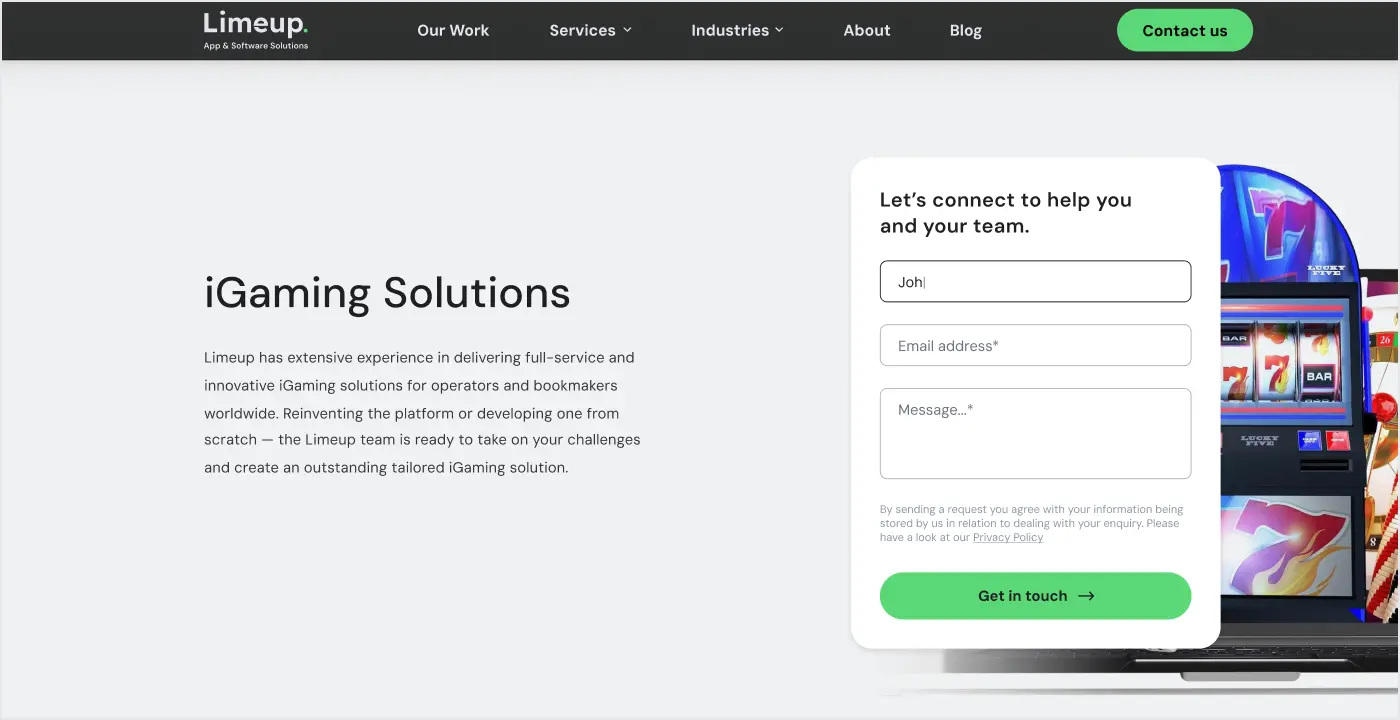
Limeup is an expert iGaming software vendor delivering valuable and customer-centric apps, considering the importance of brands’ identity and UX. With a team of 80+ designers and developers, we offer full-fledged game creation that involves marketing research of current trends and end-users’ expectations.

We successfully finished 200+ projects, built fruitful collaborations with clients in 40+ countries, and reached total customer revenue growth of $36M+. Our developers build iGaming platforms with a strong focus on security, compliance, and monetization strategies for long-term growth.
We provide a broad range of iGaming solutions, including mentioned below:

Why choose us:
Clients come to Limeup to revive underperforming platforms and modernize their legacy systems without disrupting live operations. We build new solutions as well, adapting them to your branding, business model to ensure your product competitiveness in the iGaming market.
Select case studies:
- For BingoBet, we designed and developed an online casino platform. It passed KYC and AML validations through connection with Ondofino. We used data encryption and payment tokenization to protect data and implemented mechanisms for bot identification.
- Poker House is a startup that contacted us to craft its poker website. In 18 weeks, we created gamified designs for app and web, with simple registration process, customization to set preferences, and claim rewards.
Amatic Industries

Founded: 1993
Headquarters: Rutzenmoos, Austria
Amatic Industries is a company that has created comprehensive games since the dawn of this realm. It’s powered by over 25 years on the market and is one of the most experienced. Its team offers management systems for casinos, custom designs and development.
Key services: Fullscale creation of different types of iGaming platforms.
Why choose them:
Amatic Industries covers multiple requests like slot games, roulettes, cabinets, jackpots, online gambling, etc. The company partners with global brands, leveraging their software and growing in this sector. Since Amatic Industries has delivered traditional machines with various games, being online, it has kept the vibe of classic game playing.

NSoft

Founded: 2008
Headquarters: Mostar, Bosnia and Herzegovina
For 140 clients across 35 countries, NSoft delivers a variety of casino and sportsbook games, offering AI-powered personalisation. It leverages AI for analytics and monitoring. It provides solutions under the turnkey and modular delivery models.
Key services: Business support, development of iGaming platforms.
Why choose them:
Today, NSoft has 300+ workers, which makes it one of the leaders in the iGaming industry. Moreover, the team gained the trust of numerous global brands, like Codere, Eurobet and many others.
EveryMatrix Ltd
Founded: 2008
Headquarters: Sliema, Malta
EveryMatrix Ltd. was established nearly 2 decades ago as a specialized vendor catering to B2B areas and offering top-tier services for online casinos, sports trading, third-party integrations, etc. Operating on the market among other top competitors, the firm has grown as a broad team with over 750 specialists and offices across 10 countries.
Key services: Responsible gambling, platform and game engineering.
Why choose them:
Its core values stand for collaboration, not just delivering software and thereby, clients are ensured they receive flexible gaming platforms with ongoing support — the company also partners with the World Lottery Association and European Lotteries Association.
Finnplay
Founded: 2008
Headquarters: Espoo, Finland
It has a straightforward purpose — to provide clients with fully integrated games. Having 100 tech specialists on the team and a wide range of things they can offer, the company covers numerous users’ needs. Their five leading products include Titan® Platform, 360 Services, Engagement Manager, and FinnSafe.
Key services: Mobile and web slots development.
Why choose them:
Finnplay offers integration within 8-10 weeks for new clients, stating its software is 99.7% uptime and is aligned with ISO 27001 certification. Its platform solutions cover game aggregation, single-wallet account management, and sportsbook feeds.
Pragmatic Solutions
Founded: 2013
Headquarters: Gibraltar
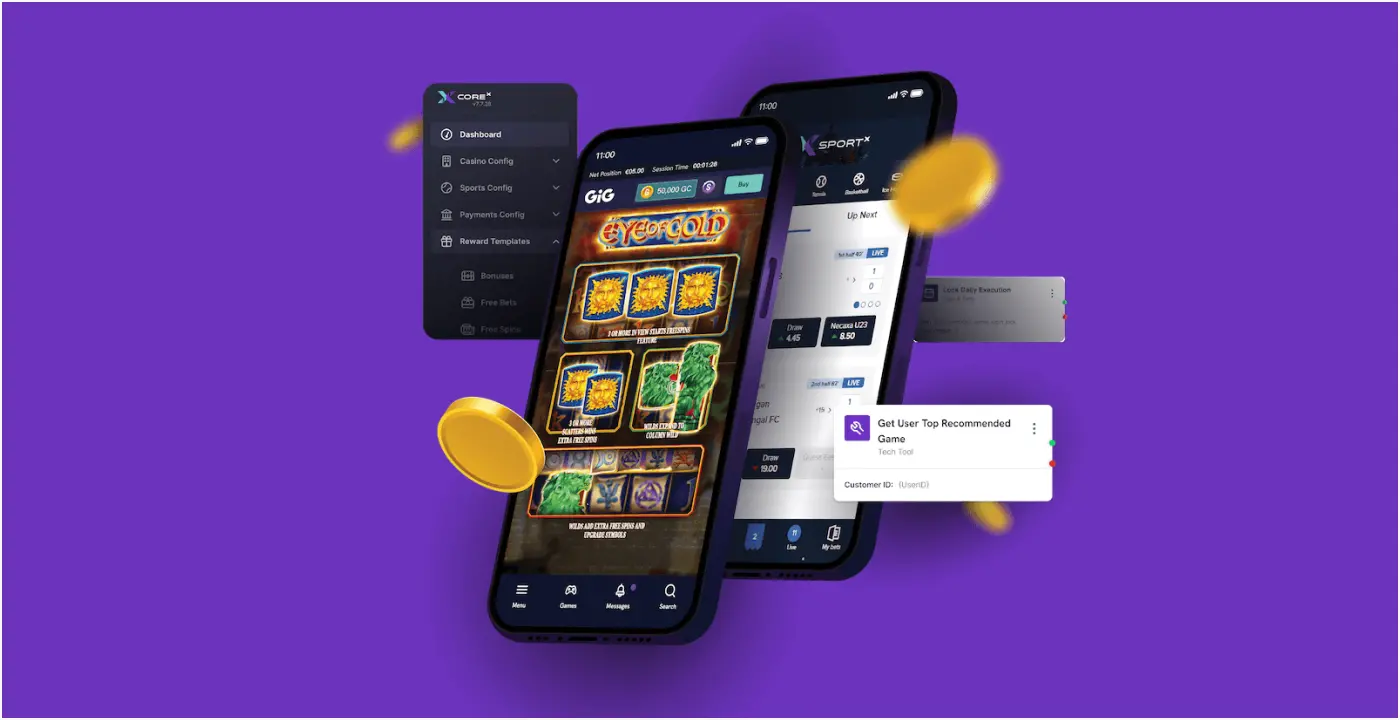
Pragmatic Solutions focuses on delivering APIs for third-party connections, supplying clients with games, payment options and CRM functionality. It is integrated with other well-known game creators, including Microgaming, Playtech, and Evolution Gaming.
Key services: Web development, migration and onboarding.
Why choose them:
Clients that partner with Pragmatic Solutions receive a full-fledged platform with various features, such as reports and analytics, product management, hosting, etc. Thanks to hard work for many years consecutively, they received GLI-19 gold certification in 2019.
NetEnt
Founded: 1996
Headquarters: Stockholm, Sweden
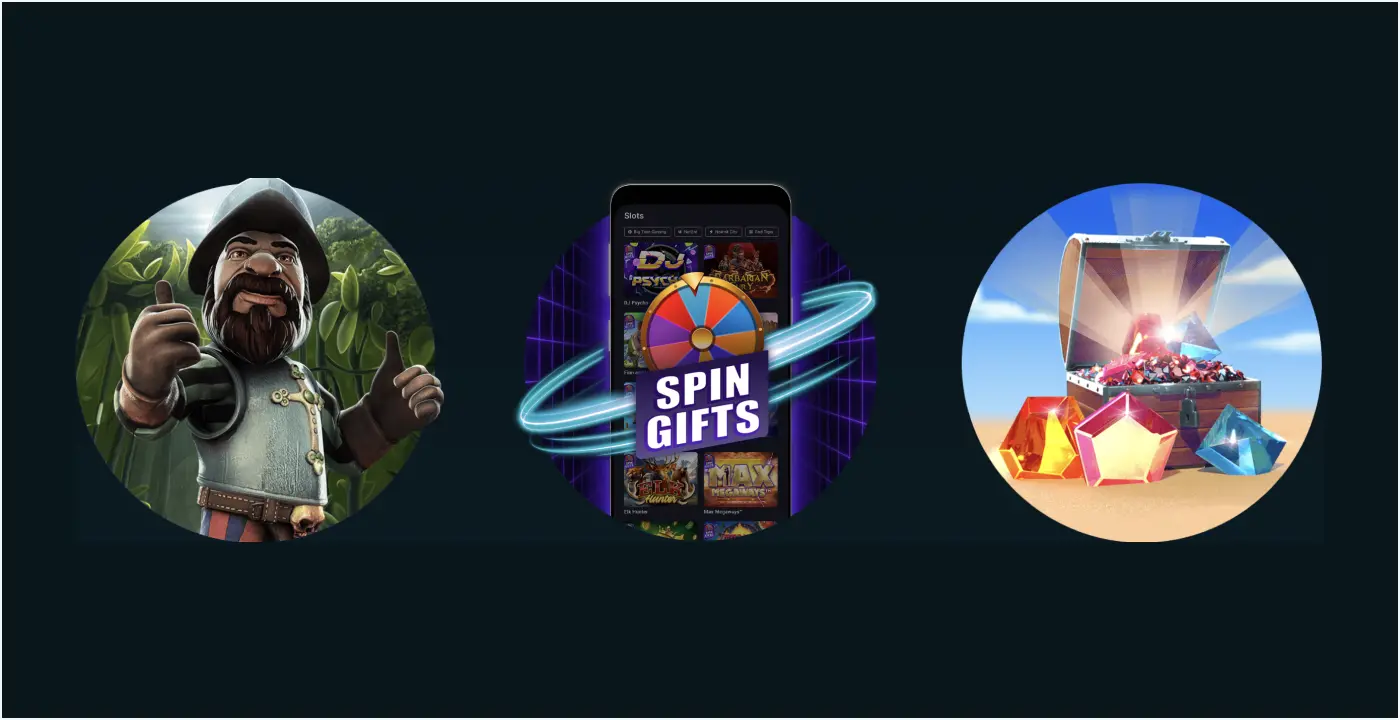
NetEnt is a global online gaming supplier that began its journey 20+ years ago and became a leading player. Since 2020, they have been part of Evolution, as are a number of other renowned brands. Over the years, it has created many popular titles, with the most famous being Starburst, Gonzo’s Quest, and Divine Fortune.
Key services: Business intelligence, regulated markets, training, hosting.
Why choose them:
Following MGA and Gibraltar regulations, NetEnt produces games that are accepted in regulated markets. It also cooperates with BeGambleAware, trying to establish an environment for responsible gaming.
IGT
Founded: 1975
Headquarters: Reno, Nevada, United States
IGT is a trustworthy partner with a global presence in the B2B gambling industry. The company offers a straightforward integration process that allows businesses to access 8,000+ casino games within one API. Presented in three leading categories and divided into PlayDigital, lottery, and gaming sectors.
Key services: Slots and eCasinos creation.
Why choose them:
IGT is also one of the most prominent players in the iGaming business and has boarded over 10,500 specialists. Such a great team allows it to provide 24/7 customer support and comprehensive projects.
Playtech
Founded: 1999
Headquarters: Tartu, Estonia
A global internet gambling solutions supplier founded in 1999 by Mor Weizer, since then, it has gained recognition as a reliable partner for delivering safe and entertaining online casinos, games, etc. The brand is widely represented on the market, having offices in 26 countries.
Key services: Operational advisory, training, consultancy, technical onboarding.
Why choose them:
Playtech offers an array of possibilities so that clients are able to receive games within terminals, live gaming experiences, multi-platform content, etc. In developing such apps for entertainment, its team focuses on innovations and regulatory compliance.
Push Gaming

Founded: 2010
Headquarters: London, United Kingdom
They started working a long time ago as specialists in online gambling and since then, they have become leaders in creating mobile-based HTML5 solutions. Its team comprises over 135 tech specialists who have already delivered 29+ various games. Push Gaming considers end-users’ needs a central value providing players with outstanding customer support.
Key services: eCasino development and management.
Why choose them:
All the numerous online casinos and other provided games have accreditations and high levels of security. The company doesn’t just offer seamless results; it stands for communication and cooperation, and the team of dedicated developers delivers a full-fledged work process.
How much does an iGaming provider charge?
The cost of the providers can differ based on the scope (casino website design, development, testing), compliance requirements, and business model. Knowing the pricing models will help you compare the providers and prevent cost surprises.
The following table provides an iGaming platform comparison based on rates. When seeking quotes, use these ranges as a guideline.
| Cost Components | Small-scale provider | Mid-tier provider | Enterprise provider |
| One-time setup fee | $10,000 – $50,000 | $50,000 – $150,000 | $150,000 – $500,000+ |
| Monthly license fee | $5,000 – $20,000 | $20,000 – $50,000 | $50,000 – $200,000 |
| Game integration fees (per game) | $500 – $5,000 | $5,000 – $15,000 | $15,000 – $50,000 |
| Payment gateway fees (per month) | $2,000 – $10,000 | $10,000 – $30,000 | $30,000 – $100,000 |
| Custom design and development | $10,000 – $100,000 | $100,000 – $500,000 | $500,000 – $2,000,000 |
Your choice depends on the company’s strategic planning, vision for the future and acceptance of the investment over a long timeframe. When businesses have an understanding of the cost mix, they keep their accounts all right while pursuing success in this competitive sphere.
Common pricing structures in the iGaming industry
There are three different models that online gambling system vendors use to structure their fees. Each model works well for different types of services and has different cost implications for your business.
Revenue-share models are directly performance-bound. They minimize upfront commitment and accelerate market entry, as such they are suitable for demand testing or white-label launches.
Hybrid pricing introduces a fixed cost floor combined with a reduced revenue share. This model stabilizes platform access while still aligning the vendor’s upside with operator growth.
Fixed licensing removes the linkage between commercial performance and cost. Platform owners pay for access rather than outcomes.
Pricing models also vary with regard to the ease of modification of the terms and conditions. Some may allow changes to the fee model only upon renewal, while others may allow mid-term restructuring once volume thresholds have been met.
Cost drivers and hidden fees
Various operational needs give rise to considerable cost differences between companies offering iGaming platforms. Three elements determine if a provided price accurately represents what will be paid.

Key cost considerations to evaluate:
- Geographic licensing needs. UKGC-regulated operations cost $120,000 annually compared with Curaçao licenses at $45,000. Every new jurisdiction contributes additional licensing costs. Know which markets you will operate in over the first two years before signing a contract.
- Payment infrastructure complexity. Processing costs vary depending on transaction volume and diversity. Adding cryptocurrency payments, local payment options, or regional options beyond traditional credit cards can greatly increase monthly processing fees.
- Game library requirements. Implementing games can cost $500-$15,000 per integration depending on the provider’s tier. To remain competitive, constant additions are necessary. Providers that offer pre-integrated catalogs can eliminate the cost of adding games, but most charge per game.
Typically, hidden charges result from gaps in accountability. When a particular activity consists of human intervention, inter-functional approvals, and exception handling, this calls for separate charges.
Here are typical hidden fees to verify:
| Hidden fees category | What triggers it | Why it’s often missed |
| Bonus rule changes | Adjusting wagering, caps, or eligibility | Treated as configuration, billed as dev work |
| Peak-hour transaction load | Events, tournaments, major sports | Traffic caps buried in SLA appendices |
| Player data exports | BI tools, CRM migration, or exit prep | Only discussed during rule changes |
These charges are hard to forecast as they are not generally modeled as operating costs but are reflected as a hindsight adjustment, occasionally beyond the close of the reporting period.
iGaming platform launch timelines
Most delays occur outside the platform itself. Banking approvals take 6-12 weeks regardless of how fast your iGaming software partner is and license and regulatory reviews add another layer of 12-16 weeks.
What really differs among providers is whether workstreams are done sequentially or parallelized. Some platforms restrict configuration until approvals are complete; others permit full pre-certification setup.
Look at the table that features typical timelines:
| Task | Duration (weeks) | Who controls it |
| Banking approval | 6-12 | Payment providers |
| License processing | 12-16 | Regulators |
| Platform setup | 2-8 | Vendor |
| Game integrations | 1-2 (each) | Vendor + studio |
In case you prefer custom iGaming platform development, the entire process including the regulatory process above will take about 32-48 weeks to complete. In weeks 1-8, architecture decisions are made, weeks 9-32 are used to construct the core engine, and weeks 32-48 are for integration tests.
Key risks when choosing an iGaming provider
The plan we’ve given to you above covers all the essential facets you need to scrutinize to connect with a vendor that knows the ropes, but the possibility of failure still exists if you don’t know where things may go wrong.
You may outline a vendor with various awards, clients and testimonials to find out later that they don’t meet data security criteria or that their solutions can evolve with your business, making you look for changes that can be swift because of the type of cooperation you have.
In this segment, we’re going to deliberate on potential threats to give you a chance to mitigate risks.

Compliance gaps
Licensed platforms can still fail audits through misconfigured operational settings.
Scenario. Your vendor has all the necessary licenses. You implement bonus rules, responsible gaming triggers, and player intervention processes. Six months after launch, an audit reveals problems with your setting of wagering multipliers. Your vendor’s platform was certified, but your operational settings did not meet a number of documentation requirements.
Solution. Operators can mitigate this problem by selecting vendors who accept joint responsibility for configuration-level compliance, not only for platform certification. Vendors who provide dedicated compliance analysts to preapprove your bonus rules and trigger values before launch will share the responsibility with you, thus preventing errors from happening.
Scalability limits
Back-office processes collapse under volume growth that front-end systems easily handle.
Scenario. Player traffic scales smoothly through peak events, although back-office operations do not. The time taken to settle finance, which was initially 90 minutes, is now increasing to 14 hours a day, and AML flagging, which is done in real time, is now being delayed even up to 36 hours.
Solution. Select vendors whose back office processes have already been proven to operate at scales at least 10× larger than the project launch projections, not just those whose front-end performs well when tested for large volumes of traffic.
Vendor dependency
Migration friction exists operationally even though exit rights are specified.
Scenario. Your exit clause provides data export and exit guarantees within 90 days. Two years go by and you’ve decided to switch to a competitor. But six months later, you are still mapping schemas with your developers because the export structure is not conducive to ingesting into the new system.
Solution. Operators reduce migration friction by choosing those vendors that have their data export structures pre-validated with major competitor import patterns. Request sample data exports during the evaluation criteria and test the sample with your team.
Data security risks
Multitenant infrastructure creates liability for breaches you did not cause.
Scenario. Your vendor uses multi-tenant architecture and there are twenty operators each sharing the underlying database cluster. A breach occurs against another operator on the platform via a platform-level vulnerability.
Your data is not accessed, yet regulators launch an investigation into your security practices within 48 hours simply because you share infrastructure with the affected operator.
Solution. Negotiating quarterly independent security audits of your specific infrastructure, not just annual, platform-wide reviews, gives you visibility with respect to whether isolation remains intact.
A renowned supplier may not be your match if their offer is limited, as those who provide hundreds and thousands of businesses with solutions typically make them not very different from each other. Using this guide, you’ll shortlist those vendors that perform right for you.