Real Estate SaaS: Types, Features, and Costs

Real estate SaaS is rapidly changing the property management industry. For one, it’s making it possible for businesses of all sizes to get access to enterprise-level software without the huge upfront cost. And secondly, it’s allowing companies to streamline their workflows and get more done in less time.
Perhaps the most important benefit of SaaS is that it helps to automate many of the manual tasks that have traditionally been done by real estate agents. This not only saves businesses time and money, but also makes the process of buying or selling a property more efficient and streamlined.
Currently, the real estate software market is growing rapidly and is expected to reach $13,29 bn in 2029 compared to $4,25 bn in 2021. It’s clear that SaaS has a major impact on the real estate industry, and it will only become more important in the years to come. So, if you’re not already using corporate real estate SaaS, now is the time to start!
What is a real estate SaaS platform?
A SaaS solution to real estate is aimed at fulfilling and automating various property management processes, operations. Unlike traditional on-premise systems, where installation on individual computers is required, SaaS platforms are entirely based online, enabling the provision of powerful tools to users via any web browser or mobile device.
These platforms are targeted towards a wide range of real estate professionals like agents, brokers, property managers, investors. Bringing their tasks together into one digital setting allows users to cut out paperwork drawbacks, minimization, and mistakes, and instead utilizes an advantage by devoting more energy to client relationships.
Businesses of all sizes find SaaS platforms profitable due to subscription-based pricing. Instead of making huge payments upfront for licenses, users are charged based on a monthly/annual payment. This regime removes entry barriers while making sure that all work with advanced features and protections.
With that information in mind, let’s move to the next point of this article and take a look at nuances that come with this solution.
Real estate SaaS investment considerations
When you’re ready to invest in a SaaS for real estate business, there are a few key factors to consider. Starting with a statistics, this market is predicted to reach $288012.3 million by 2035 with growing need for efficient management platforms among businesses. Bearing this in mind, let’s consider the core points.

The first question is what specific problems you hope the software will solve. From there, you’ll want to calculate the total cost of ownership (TCO). This includes not only the initial purchase price but also factors like maintenance, training, and ongoing support costs.
Second, it’s vital to think about the long-term scalability of the real estate SaaS platform. As your business grows, will the software be able to grow with you? Will it be able to handle an increasing volume of transactions and data? Will it run smoothly under heavy customer traffic? Make sure to choose a solution that can accommodate your future needs.
Third, don’t forget to factor in the intangibles. How easy is the software to use? What’s the company’s reputation? How good is their customer support? Investing in the right SaaS solution is a big decision, so you want to be sure you choose a company you can trust.
Finally, depending on your needs, you may want a completely customizable real estate SaaS solution or one that’s more off-the-shelf. Make sure to create a comprehensive software requirements list upfront so you can make an informed decision.
The most important thing is to find a solution that will help you streamline your business processes and make your team more efficient. With the bespoke software in place, you’ll have a bigger chance to unlock the full potential of your real estate business.

How to create a SaaS product for real estate?
Security is one of the most important factors when creating a SaaS product. Real estate SaaS products must be incredibly secure and reliable since it deals with highly sensitive data such as users’ names, addresses, phone numbers, credit card numbers, etc.
Here are some tips to help you create a secure customer platform.

1. Have a comprehensive security plan. Your security plan should include measures for both preventing and responding to attacks.
2. Use strong passwords and multifactor authentication. Ensure your system does not allow easy passwords and verifies user identity by the “something you know, something you have, and something you are” principle.
3. Apply advanced encryption methods. Make sure your data is encrypted both in transit and at rest.
4. Implement a logging system. This will enable you to track user actions and detect malicious behaviors.
5. Use security protocols. Secure sockets layer (SSL) certificates and other security protocols will help establish trust between a web browser and your system’s server. This will ensure all data is exchanged securely and all transactions are secure.
6. Create backups and a disaster recovery plan. This will help you restore data and get your real estate SaaS platform up and running again in case of an incident.
7. Regularly update your software. Hackers constantly evolve their methods, so you must stay ahead of the curve by regularly updating your software and security measures.
8. Educate your team on security best practices. Ensure your team understands the importance of security and knows how to protect your company’s data.
By following these tips, you can create secure SaaS products for your real estate company that will keep your customers’ data safe and protected.
Common types of real estate SaaS platforms
As a CEO or founder, you know that the success of your company depends on a number of factors. One of the most important factors is having the right tools and technologies in place.
There are several types of real estate SaaS solutions in the market. To manage your business effectively, choose one that meets your needs, budget, and business growth plans.

Property management SaaS
Property management SaaS is designed to help property managers keep track of their properties, tenants, and finances. This software automates many tasks, such as rent collection and maintenance requests. It also allows property managers to track expenses and income, schedule repairs and maintenance, generate reports, find new tenants, and stay in touch with house residents.
The main benefit of using this software is that it organizes and summarizes all the important information in an easy-to-read format. This software is a must-have for any company that owns or manages real estate.
Real estate CRM
This type of real estate SaaS allows real estate agents to manage their clients, prospects, and leads. It helps real estate professionals to stay organized and keep track of their business by providing such features as
- contact database
- task management
- property search
- property details (photos, floor plans, and maps)
- lead tracking
- transaction management
- report generation.
Booking and reservation tools
Booking or reservation software is a real estate SaaS platform that allows property managers to manage and book reservations for their rental properties. It streamlines the booking process by providing a central location where renters can find information about all of the properties that are available for rent.
This type of software can be a huge time-saver for property managers, as it eliminates the need to manually track bookings and reservations. It also helps managers keep track of their occupancy rates, which can be critical in maximizing profits.
Lead generation system
Lead generation is one of the most important aspects for any real estate SaaS company. A steady stream of leads can help agents and brokers fill their pipelines with potential buyers and sellers, which results in more sales and commissions.
Real estate lead generation software is a computer program that helps agents and brokers identify, track, and manage leads from potential home buyers and sellers. It collects data from various sources like social media and the web. The data is then organized into a user-friendly platform that makes it easy to find potential customers. Lead generation software typically includes features such as contact management, email marketing, lead capture forms, and more.
Lease administration software
A lease administration software helps real estate professionals manage their leases. It keeps track of all the important details related to leases, which helps save money and avoid legal trouble.
Common features of lease administration software include the following:
- leasing process automation
- lease renewals and amendments tracking
- document storage
- collaboration space
- integration with other property management tools.
Key features of a real estate SaaS platform
Cutting-edge systems for real estate are more than online listing tools since they cover needs from properties administration, leads converting activities, other operations. In this section, you will learn about the essential functionalities that take place in today’s platforms and which impact the system adoption, performance.

- Property and listing management is the core reason for businesses turning to SaaS development. It includes centralized database of properties and its storage.
- Role-based access control which are configurable in this case, helps to differentiate accesses for agents, brokers, admins, and other workers with limited possibilities.
- Collaboration tool which stands for in-app messaging, emails, photo/files sharing between specialists under one digital roof.
- Lead management and CRM helps to avoid unnecessary manual work to pull leads, interactions, etc.
Summing up, the features you are able to receive stand for balancing the efficiency of operations with data, scalability and better administration. Below, you will find the list of the top-tier vendors who can make a reliable system for your needs with custom functions.
List of the best real estate SaaS companies
It can be tough to know where to start when it comes to finding the right software development and product design company, but luckily, we’ve done all the hard work for you. Check out our list of the most popular real estate SaaS companies and see for yourself how they can help you take your business to the next level.
Based on our expertise in real estate development, we picked up three real estate SaaS tech companies specializing in custom real estate solutions and three companies delivering proprietary real estate SaaS products. We also provided contact information, the price you should count on, and the team size of each company based on the data posted at Clutch.
Each of these companies brings its own unique set of strengths to the table. So it’s important to do your research and find the one that best suits your needs. But with so many great options out there, there’s no doubt that you’ll be able to find the SaaS company for real estate that perfectly fits your business.
Limeup
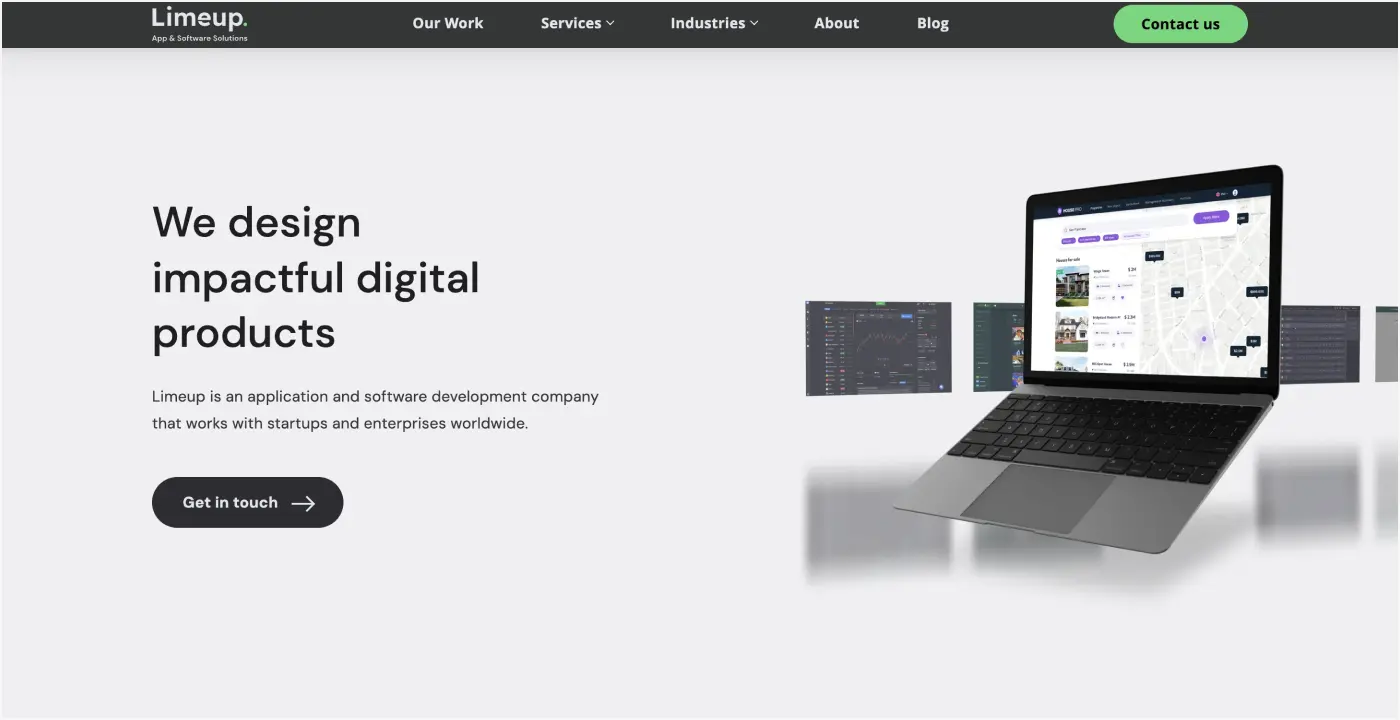
Headquarters: 152–160 City Road, London EC1V 2NX, United Kingdom
Key services: Product design, product development, user interface, and user experience design
Hourly rate: $50 – $99
Minimum project budget: $10,000
Team size: 30
Year founded: 2015
Phone: 0 20 8135 6600
Email: hello@test44.limeup.io
At Limeup, we know real estate is a complex and ever-changing industry, so we take a comprehensive and customized approach to our development process. We work with our clients every step of the way to ensure that the end product meets their needs and goals.
Our team has 7+ years of experience developing real estate SaaS app solutions, healthcare platforms, fintech applications, edtech services, games, blockchain apps, and more.
We understand the complexities of the software development market and have the expertise to create real estate SaaS products that streamline our clients’ business processes and positively impact their KPIs.
Look at our recent projects below to learn more about our experience in SaaS for real estate development.
Developing a property management system for HousePro
HousePro, a US-based property management company, turned to Limeup to develop user-friendly software to digitize their property operations. We partnered with HousePro to create a document management system that addressed the challenges they faced due to handling a lot of data on physical storage media. This inefficiency has led to additional costs.
Our team started by gathering requirements and talking to employees about their expectations from the management system.
Our product design process included architecture design, mockups, and interactive prototypes for web and mobile apps. The Limeup full-stack team developed the front-end and back-end of the application as a part of our full-stack software development services.
As a result, we delivered the full-fledged real estate SaaS platform in 22 weeks. The client highly appreciated our professional work attitude and the top-quality product we created.
HousePro reported improving business efficiency by 95% shortly after using the property management system.

Property management system development by Limeup
Developing a real estate tokenization platform for Bloсkch.in
On behalf of Bloсkch.in, a German real estate company, we designed and developed tokenization web and mobile applications.
There’re a lot of talks about blockchain and how it will revolutionize the world. At Limeup, we’ve got an opportunity to work on a real estate tokenization app.

Real estate tokenization platform by Limeup
What is real estate tokenization?
It’s the process of taking a physical piece of property and turning it into a digital asset that can be traded on a blockchain. That’s what we built our real estate SaaS app solution for—to make it easier for people to trade property tokens.
The Limeup team undertook the entire development process, from product research to web and mobile development of real estate SaaS. We completed the project in 22 weeks and received highly positive feedback from the client.

Magora Systems
Headquarters: 56 Shoreditch High St, London, Essex, E1 6JJ, United Kingdom
Key services: web development, mobile development, MVP for startups
Hourly rate: $50 – $99
Minimum project budget: $10,000
Team size: 50 – 249
Year founded: 2000
Phone: +442071835820
Magora Systems is one of the best SaaS companies for real estate that works with startups and businesses of all sizes to develop innovative software products that solve real-world problems.
The Magora Systems team consists of experienced developers with a wealth of knowledge in custom product development. They use the latest technologies and tools to create bespoke software that meets the specific needs of their clients.
The company’s services include SaaS development for real estate, software solutions for transport and logistics, apps for healthcare and medicine, software for entertainment, sport, and communication, software platforms for education, marketing, and more.
Powercode
Headquarters: Tallis House, 2 Tallis Street, London, United Kingdom
Key services: web and mobile development, design, business analytics, legacy code modernization, QA
Hourly rate: $25 – $49
Minimum project budget: $10,000
Team size: 50 – 249
Year founded: 2015
Phone: +442045772044
Powercode specializes in creating custom software across various industries, from real estate to healthcare and retail. Their developers can help you with everything from desktop applications to mobile apps and SaaS products.
The Powercode team has a proven track record of delivering high-quality products that meet the specific needs of its clients.
If you’re looking for SaaS companies for real estate development, Powercode is worth considering.
SmartRent
Headquarters: 8665 E. Hartford Drive Scottsdale, AZ 85255, Suite 200, USA
Key services: enterprise smart home solutions for property managers and homeowners
Pricing: calculated individually for each client
Team size: 639
Year founded: 2017
Phone: +44167033 8119
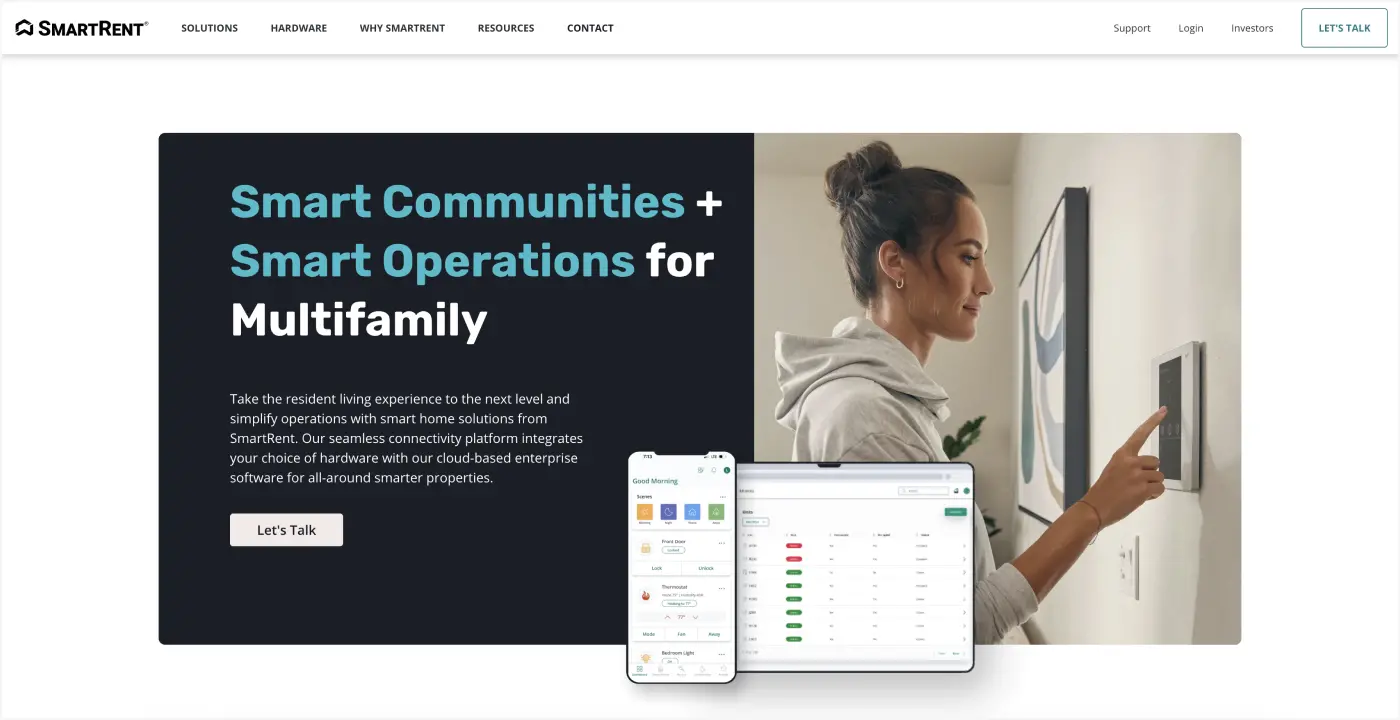
SmartRent develops a real estate SaaS platform for house residents, managers, and construction firms. The platform is a suite of tools helping users manage their properties more efficiently. It gives property managers effortless visibility and control of all their communities’ belongings while providing extra profits through all-in-one smart home apps for house residents.
The SmartRent software product features include access control, access protection, parking management, smart apartment, and more.
If you need an off-the-shelf real estate SaaS solution with automation capabilities for property management, SmartRent will suit you well.
Qualia
Headquarters: 30 Sheridan St, San Francisco, California, 94103, United States
Key services: title and escrow software, closing services, online notarization, reconciliation
Pricing: calculated individually for each client
Number of employees: 199
Year founded: 2015
Phone: +18554415498
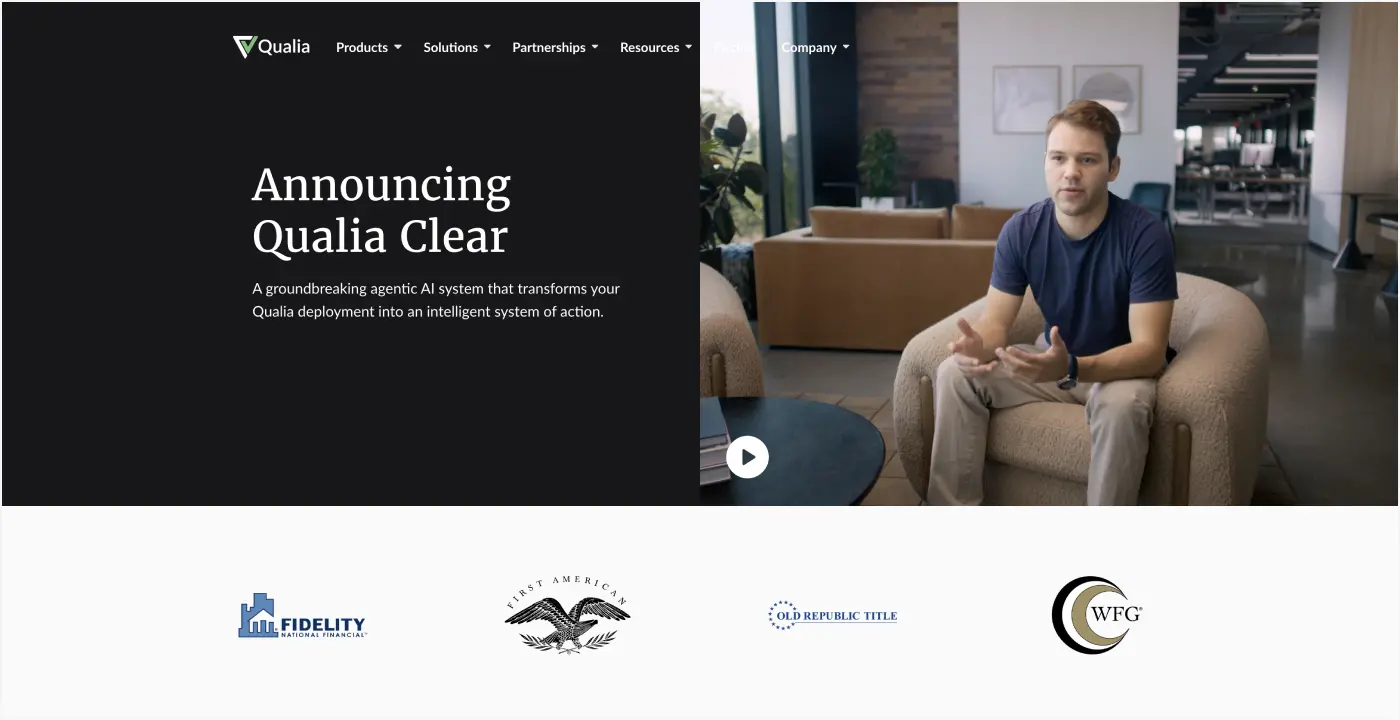
Qualia platform is designed to help users buy, sell, and borrow property more efficiently. It is built on cloud technology so you can access it anywhere and on any device.
Qualia provides solutions for mortgage lenders, SaaS real estate agents, title insurance underwriters, homeowners, sellers, and buyers. It allows users to close deals, remotely notarize transactions, and exchange data in a secure way.
If you are looking for a ready-made SaaS platform with a variety of features for real estate management, Qualia may be a good choice.
Robin (Powered)
Headquarters: 11 Farnsworth St, Boston, Massachusetts, 02210, United States
Key services: desk and room management, distance planning, workplace analytics, contact tracing
Pricing: depends on the subscription plan
Team size: 101 – 250
Year founded: 2014
Phone: +16179100454
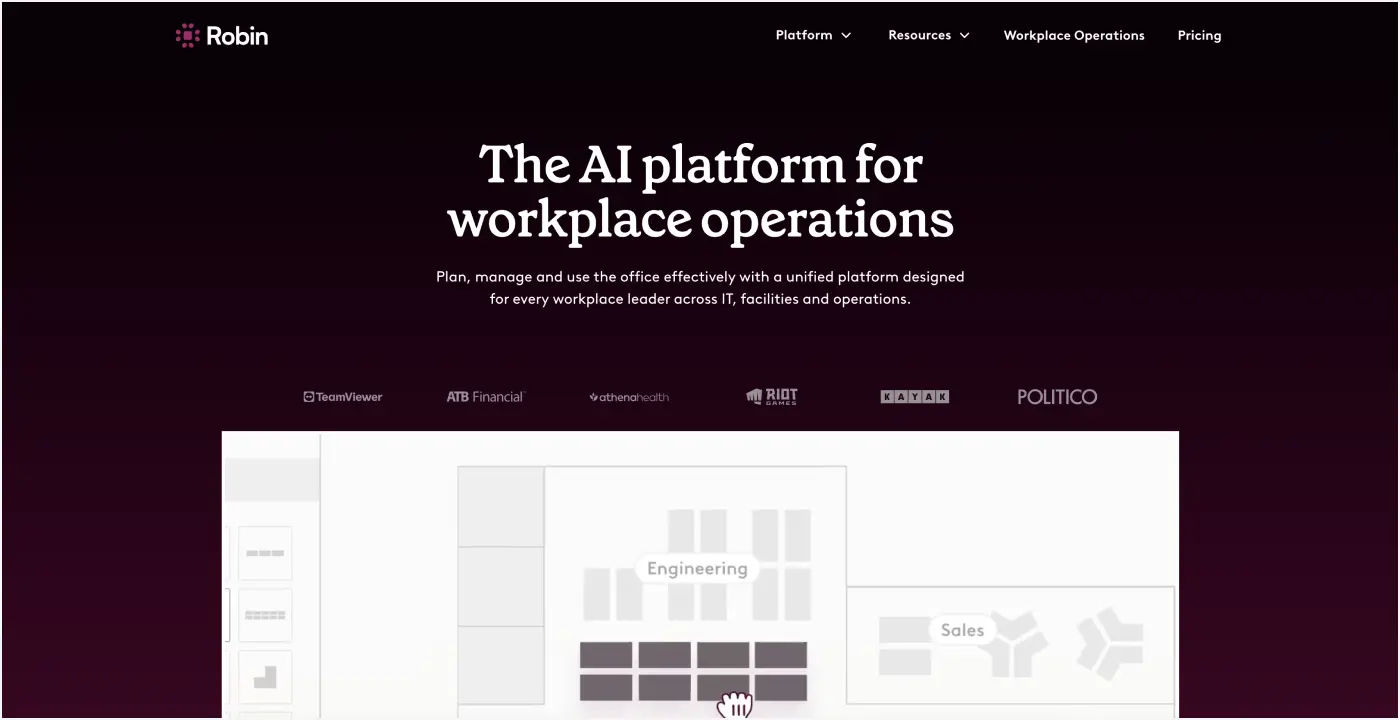
Robin is one of the best software development companies in New York that provides an office space booking tool accessible through mobile, web, and tablet apps. If you’re a mobile user, you can take advantage of the added feature of iBeacon technology that runs in the background and automatically books your calendar when you enter a room. This ensures your team always has access to a real-time overview of who and what’s available.
Robin (Powered) software allows users to check available desks, see where team members sit, find out who is in the office at what time, and discover upcoming events at specific locations.
If you need workplace software for a hybrid team, Robin (Powered) may meet your needs.
How to choose a SaaS company for real estate?
When choosing a tech company to work on a real estate SaaS development, it’s important to do your research. There are a lot of popular real estate SaaS companies, moreover, as the statistics tells, the number is approximately 5.57K real estate SaaS firms operating in this niche in the world, among which are the vendors.
Here are a few things to consider when choosing a technology partner:

- Solid experience. Make sure the company has experience working in the real estate design industry. They should know the ins and outs of the process and be able to guide you through it.
- Technical сapability. The company should also have a strong technical team that is capable of coding, designing, and releasing your platform in a timely manner.
- Customer focus. A potential technology partner must be willing to work with you to understand your needs and desires for the platform. They should also be responsive to feedback and ready to make changes based on customer reviews.
- Value proposition. The tech company should provide value for your money and be worth the investment. You should feel confident that you make a smart decision by choosing them.
- Legal contract. A good contract spells out the expectations and deliverables for both parties, making sure there are no misunderstandings. If there is a dispute between you and your development team, a contract will help provide a clear way to resolve the conflict.
Real Estate SaaS Development: Key Takeaways
The creation of a SaaS platform for real estate means creating a cloud-based solution that meets the specific requirements of the industry, be it property management, listing aggregation, transaction processing, or market analytics. The whole process generally goes through the following major stages:
- discovering and researching the market to find out what problems the users have,
- determining the main functions and the technical specs,
- designing the user interface and the user experience according to real estate practices,
- developing iteratively with testing being done at each stage,
- integrating with outside services such as MLS databases or payment gateways, etc.
If you’re looking for a company that can provide you with top-notch software development services, look no further than Limeup. We’re a team of experienced developers, designers, QA engineers, marketers, and business analysts with a proven track record in delivering quality real estate SaaS solutions.
Not only do we have the technical expertise, but we also have the know-how to navigate the ever-changing landscape of the real estate SaaS market. We’ll work with you every step of the way to ensure that your platform is tailored to your specific needs and meets all your requirements. With our help, you can confidently take your business to the next level.
If you’re looking for real estate SaaS development, don’t hesitate to contact us. We’d be more than happy to discuss your needs and see how we can help.
FAQ
How long does it take to develop a real estate SaaS platform?
Timelines vary based on complexity. A basic MVP with core features typically takes 3–6 months, while a full-featured platform with integrations, advanced analytics, mobile apps may require 9–18 months. Factors like custom functionality, third-party integrations, regulatory requirements also influence the timeline.
Who can benefit the most from using real estate SaaS solutions?
The grand beneficiaries have definitely been businesses in real estate, property management, brokers, developers, investors. They are able to get these solutions to significantly improve operations such as disseminating listings, managing communication with tenants, lease tracking, market analysis etc.
It is all done for essentially saving the time and effort of the leasing crew looking after multiple properties and large numbers of transactions.
How secure are real estate SaaS platforms?
Let’s consider some basics that are common for such solutions under the regulations for the real estate niche. There is data encryption, regular backups, compliance with GDPR or SOC 2 so that you win the trust of your users.
It is commonly handled by the development company and their workers, and they will present you with reliable certifications that prove their ability to handle solution protection, response protocols and more documents before even jumping into the creation.
What criteria indicate a reliable real estate SaaS development partner?
Seek out the following points:
- Demonstrated experience in real estate or proptech projects
- Rich portfolio of similar solutions,
- Clear communication practices, along with post-launch support services.
Furthermore technical expertise in relevant integrations (MLS, payment systems, mapping APIs), adherence to security standards, good customer referrals you can find online are also strong indicators of stability.