Gap Analysis Definition
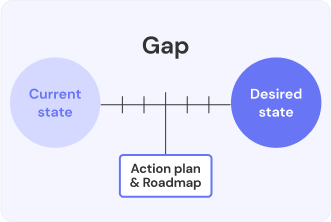
Gap analysis, which is sometimes referred to as needs analysis, is a technique that determines the discrepancy between an organization’s present condition and its desired objectives. It makes clear the spots where performance, processes, or systems do not meet the requirements, thus allowing teams to make plans for the improvement of those areas and to fill the “gap” between the current results and the objectives of the organization.
The gap analysis technique in software development facilitates the process of already assessing systems, features, and workflows and pointing out what type of improvement is necessary to satisfy business needs, user expectations, and technical specifications.
How gap analysis works
A successful gap analysis is a methodical process of evaluating the present situation, contrasting it with the desired outcomes, and taking specific measures to eliminate the gaps.
- Define objectives. Set up unambiguous targets for business performance, software functionality, or user experience.
- Measure current performance. Gather information about current processes, system capabilities, and user outcomes.
- Identify gaps. Map out where the current performance is falling short compared to the desired targets and uncover areas of inefficiency.
- Plan improvements. Come up with the strategies to fill the gaps, including new features, changes in processes, or training.
Through gap analysis, teams can not only highlight actions but also make the best use of resources and guarantee that software solutions and business operations are in line with the strategic goals.