Decision Table Definition
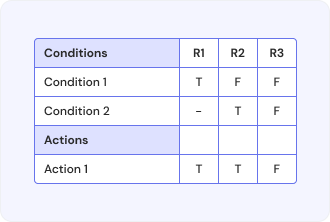
Decision Table – a black-box testing approach where the modeled test cases are applied to exercise the combinations of conditions and the resulting actions shown in the decision table.
The fewer discrepancies that are there, the simpler and clearer the requirements. In black box testing, one is only concerned with the inputs and outputs of the system without bothering about the internal structure of the program.
International body ISTQB, which underlines the necessity of software testing in system quality, says that black box techniques are the ones applied for the conduction of functional tests based on the functions or characteristics of the system and its interaction with other systems. Or components. Identify test cases according to the software functionality with specification-based techniques and non-functional test design.
There are a few key points to mention that differentiate decision table software from other options. Firstly, it is easier to get back, make changes, and re-edit what is being prepared with the help of software. Contemporary decision table tools could also help the practitioner in such tasks as condition/action/rule highlighting, table layout, reporting, etc.
Decision tables are beneficial when testing systems that have multiple input combinations resulting in different outputs. By doing so, they are able to embrace each and every logical situation, ensure that the chances of missing test cases are very low, deliver response documents that are very clear and can be checked by all the stakeholders, not just the technical ones, but also the business ones.