False bottoms definition
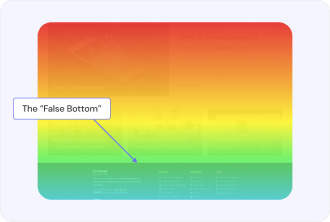
False bottoms describe a UX issue where users believe they have reached the end of a page, even though additional content is still available below. This false visual cue creates the impression that no further scrolling is needed.
As a result, users may miss important information, calls to action, or interactive elements simply because the interface suggests completion too early.
Why do false bottoms occur
Layout setup most often results in false bottoms, when huge areas of whitespace, visual dividers, background color changes, or strong horizontal lines that look a natural page ending are included. Users think the content flow has ceased, without any clear signals.
How to prevent false bottoms in UX design
The ongoing visual flow coupled with the use of cues like gradient transitions, partial content previews, scroll indicators, sticky navigation, or subtle motion hints that signal additional content below, can help designers steer clear of false bottoms.
A clear layout and uniformity in the spacing allow the user to see that the page carries on, which in return, will improve the interaction with the content and its discovery.