Feasibility Study Definition
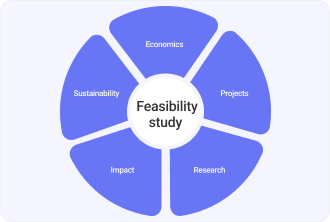
Feasibility study is an analysis that is done prior to the start of software development, and it is to this end that the project is evaluated in terms of its technical, financial, operational, and legal aspects. Its main aim is to find out whether the solution suggested can be successfully developed and whether it is compatible with the business objectives.
The study acts as a risk reducer, cost controller, and a guide for management to steer clear of funding those projects that have little or no chance of succeeding.
What a feasibility study includes
Typically, a feasibility study investigates the following main areas:
- Technical feasibility — the availability of the necessary technology, infrastructure, and skills.
- Economic feasibility — costs of development, ROI, and impact on budgets.
- Operational feasibility — alignment with business operation and user requirement.
- Schedule feasibility — achievable timelines for delivery.
- Legal feasibility — adhering to laws and regulations as well as contractual obligations.
Feasibility study process
At the outset, project purposes, limits, and conditions are determined. Next, teams gather pertinent information concerning tech, ops, and rules. The data obtained is scrutinized according to set standards, then goes through risk analysis and final decision-making.
The result is a systematic suggestion that helps to make going or not going decisions based on information.