Architecture Definition
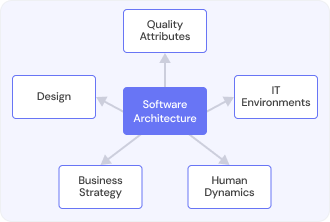
Architecture is a fundamental means of describing the design of a software system. The designer makes approximations regarding the interaction among components, placing modules and controlling the overall working of the system. A designer can visualize architecture as a layout that gives developers not only the idea of the software’s functions but also the way of communicating with the different stakeholders.
An architecture that is well-done undeniably lays down a basis for the continuous performance, expandability, and serviceability to come afterwards. Furthermore, it organizes the developers’ work in a very effective way so that their collaboration is directed to the same goal and the software solution is also integrated.
Purpose of Software Architecture
Mainly, the software architecture is to map out the whole system at a high level, which then directs the making of the decisions and guarantees the same functionality. Besides, architecture works as a foresight of problems to come, a way to optimize working processes, and a way to lay a foundation for updates or expansion in the future.
Benefits of Software Architecture
A thoughtfully developed software architecture is not just a blueprint—it rather lays the ground for the efficient use of resources, teamwork, and the long-term development of the system. Its advantages are distributed over the system’s performance, scalability, and maintenance, so the system is still solid even when it changes.
- Seamless performance. The systems that are well designed have the ability to carry on their operations with very few restrictions.
- Scalability. The system’s modular design gives it the flexibility to increase its size or to change its configuration without the need for major rewrites.
- Clear communication. Through documentation, a shared understanding is created among developers and stakeholders.
- Maintenance and adaptability. A straightforward design makes it easier to fix bugs, add new features, and connect with other systems.
Using these benefits, the teams can create systems that cope with the present demands and are also flexible for upcoming requirements, minimizing the risk and maximizing the overall development efficiency.