Hire a Nearshore Developer: Best Platforms & Hiring Guide (2025)


Do you want to hire nearshore developers who will understand your project, work in your timezone, and fit your budget quickly? This guide features a list of the most used job-searching platforms where you can choose a location filter or specify your region preferences to managers, which will help expand your team effectively without overpaying.
We reviewed dozens of websites using real data from independent comment aggregators to present you with this catalog of top platforms making hiring nearshore developers easier for you. This material compares their speed of hiring, vetting approaches and support, enabling you to pick the right site for your project.
List of websites to hire nearshore developers
Founded: 2017
Headquarters: London, United Kingdom
With Limeup, you don’t need to wonder how to hire nearshore developers for your business, as we connect companies from Great Britain, Europe and the USA with reliable hires, offering quick onboarding access to mid- to senior-level programmers. Our comprehensive tech stack includes Python, JavaScript, AWS, GO, C++, and more.

Our team has successfully completed over 200 projects for firms in the finance, shipping, and retail industries, and Limeup’s clients earned $36M+ in combined revenue. We build partnerships lasting around five years, having worked with Vodafone, BNP Paribas, Inventor, and many others.
Cooperation models:

Key benefits:
- Our nearshore engineering team follows the most current data protection practices, as well as NDAs, IP, and regulatory compliance.
- We provide full-cycle development of web and mobile applications, software solutions, and UI/UX design.
- Limeup’s team has experience in cooperating with startups and Fortune 500 companies.
Why choose us:
Partnering with us, you will benefit from easy collaboration, cost-effective pricing, and measurable results. Speaking of our partners’ achievements, Raccoon.Recovery won an $800,000 growth grant and Wahler reduced their workload by 60%.
Founded: 2017
Headquarters: Berlin, Germany
impltech builds software for businesses in Europe and North America. This agency can help you find a nearshore developer in compatible time zones. They scale teams rapidly to meet your project deadlines.
They have over 75+ engineers and have completed more than 100 projects for clients across the healthcare, real estate, fintech, and other sectors. The team fully satisfies 95% of their clients, with 5-star ratings on independent resources.
Key benefits:
- Flexible engagement models including dedicated teams, staff augmentation, and project-based partnerships.
- Developers integrate seamlessly as an extension of your existing in-house team.
- Custom solutions designed to help clients unlock new revenue streams and growth opportunities.
Why choose them:
Their partners specifically praise their ability to connect them with senior full-stack programmers, DevOps engineers, and designers who are adaptable to demanding environments and supportive throughout the entire cooperation.
Founded: 2002
Headquarters: Sunnyvale, CA, USA
LinkedIn is the largest professional network with 900 million+ users. Employers who want to find nearshore developers can post job openings or search profiles to attract tech workers globally. The “#OPENTOWORK” badge identifies people actively seeking roles and makes recruitment easier.
Key benefits:
Posting jobs and searching are free for users; however, the website offers paid features as well. The main advantage of this platform is that you can view recommendations from managers and featured skills to evaluate candidates properly.
Why choose them:
You can access a wide talent pool with many specializations and use advanced search filters to narrow results to exactly what you need. If you want to hire several engineers at once, you can also review offers from outsourcing agencies as they create their accounts.

Founded: 2013
Headquarters: San Francisco, CA, USA
Upwork connects you with 18 million+ freelancers globally, allowing companies to hire a dedicated nearshore developer soon after publishing your project specifications. You don’t need to pay upfront, as freelancers pay a service fee of 10% on earnings (5% for long-term clients), while some contracts may include a 5% client service fee.
Key benefits:
The system protects your money until work gets delivered. When posting an opening you receive proposals sorted by skills, portfolios, rates, and locations. You can choose specific regions when searching to find freelancers who work in your timezone, allowing only people from selected countries to apply for your projects.
Why choose them:
This portal is best for short-term or one-off projects when you need to handle specific tasks that will take a few days or hours, however you can also find profiles of talents who commit to ongoing work.
Founded: 2010
Headquarters: Wilmington, DE, USA
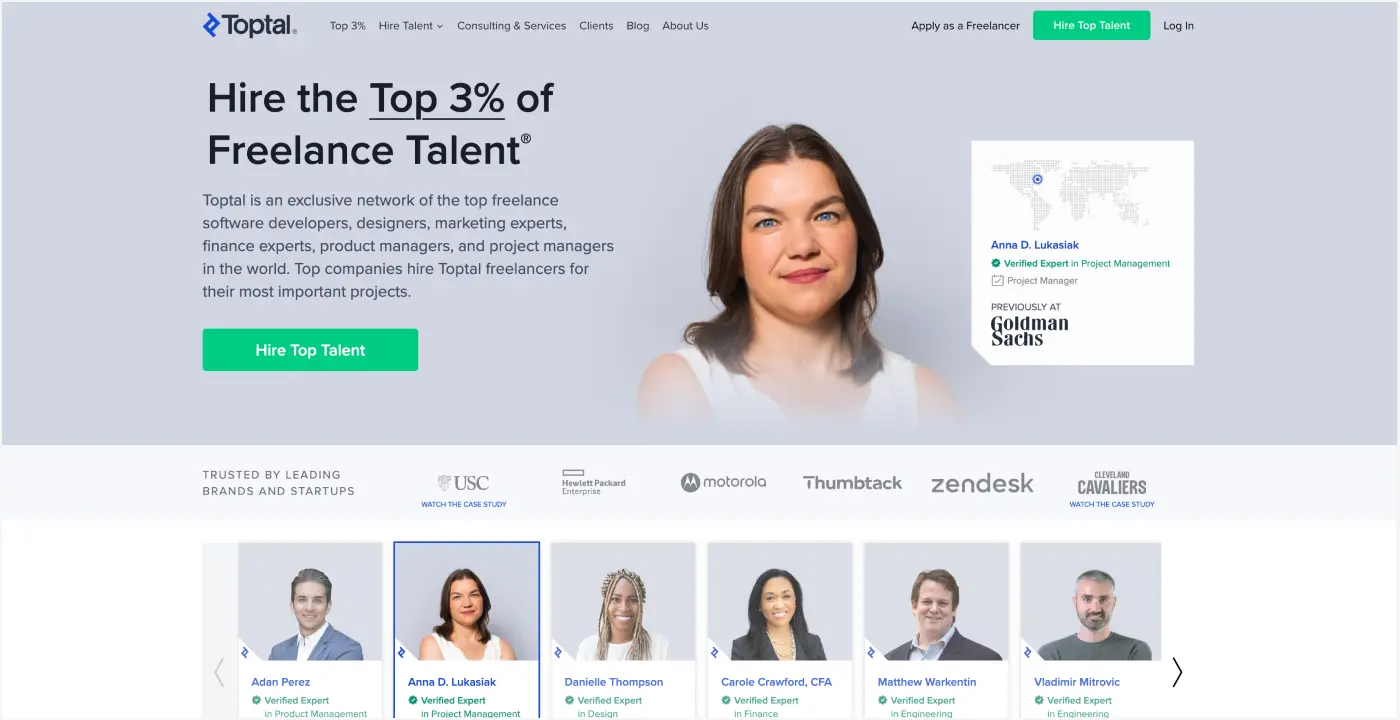
The platform states that only 3% of applicants pass their evaluation, which consists of technical assessments and interviews to identify candidates’ strengths. You get replacement guarantees if the collaboration doesn’t work out, which reduces hiring risk and protects your project timeline.
Key benefits:
Toptal’s matching team connects you with developers from their network of 20,000+ vetted specialists. During the intake process, you can specify your timezone requirements and preference to hire nearshore programmers.
Why choose them:
You can select this website when technical excellence is non-negotiable, as on this platform you can connect with specialists who have worked for well-known companies like Google and Amazon. The portal’s rigorous vetting cuts hiring risk significantly and advantageous trial periods let you confirm fit before committing.

Founded: 2019
Headquarters: San Francisco, CA, USA
Arc.dev promises to match you with accomplished engineers through proprietary screening. The platform has 450,000+ experts who will bring diverse technical skills, offering flexibility to deliver projects on different timelines.
Key benefits:
The website offers multiple contract options including contract-to-hire and direct hire, allowing you to test a candidate with a short project. You can select regions, such as Mexico and Canada, with matching taking about 72 hours, making hiring a nearshore developer quick.
Why choose them:
Arc.dev is best when you want to scale quickly or when you need specialized expertise. Global reach and fast matching serve different project needs and team structures.
Founded: 2009
Headquarters: Sydney, Australia
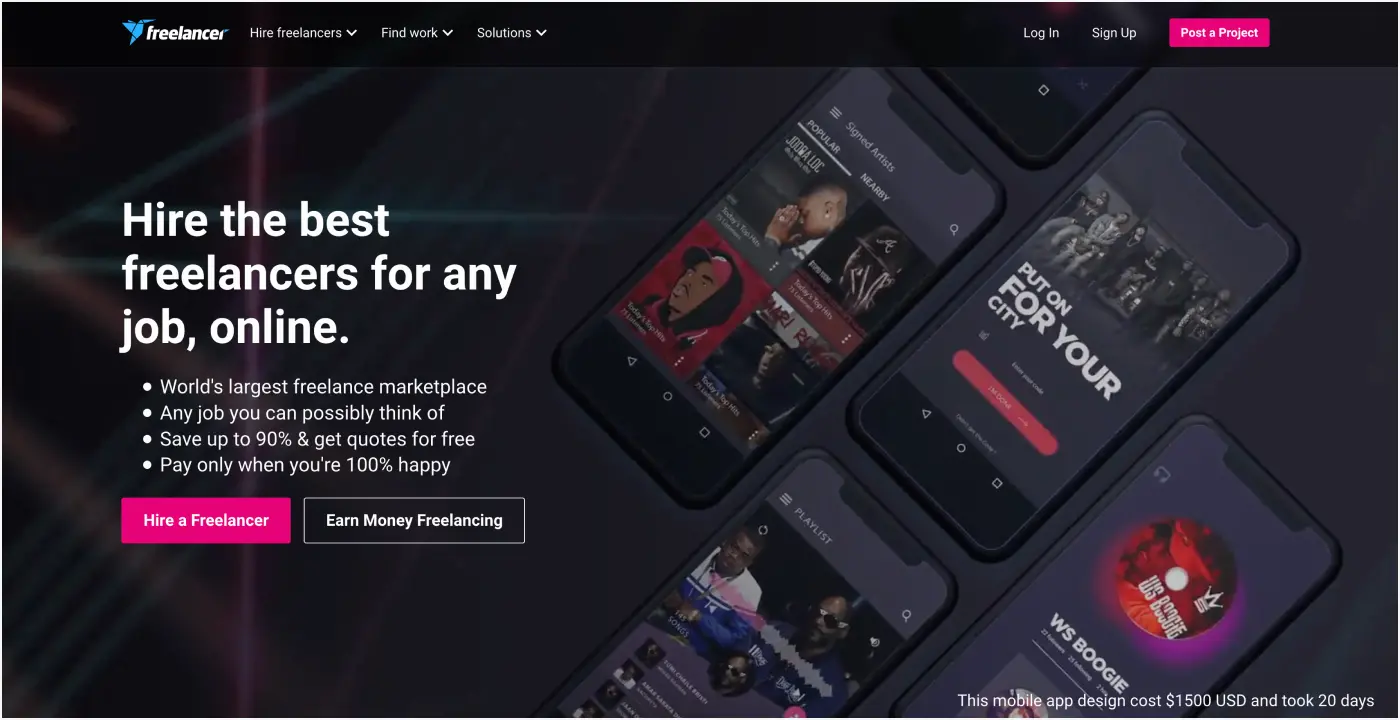
Freelancer.com can link you to coders across 240+ countries with 60 million+ users, making it possible for you to contact an experienced nearshore developer for hire from a target region. Work goes to whoever bids best on cost, timeline, or approach.
Key benefits:
Portfolio reviews and verified ratings accurately reflect past performance, helping you form an opinion and evaluate it using real client feedback. Owing to competitive bidding, the costs for specialized or short-term work can be reduced.
Why choose them:
The payment method is typically milestone-based, connected not to the time spent but to the deliverables.
Founded: 2012
Headquarters: Fishers, IN, USA
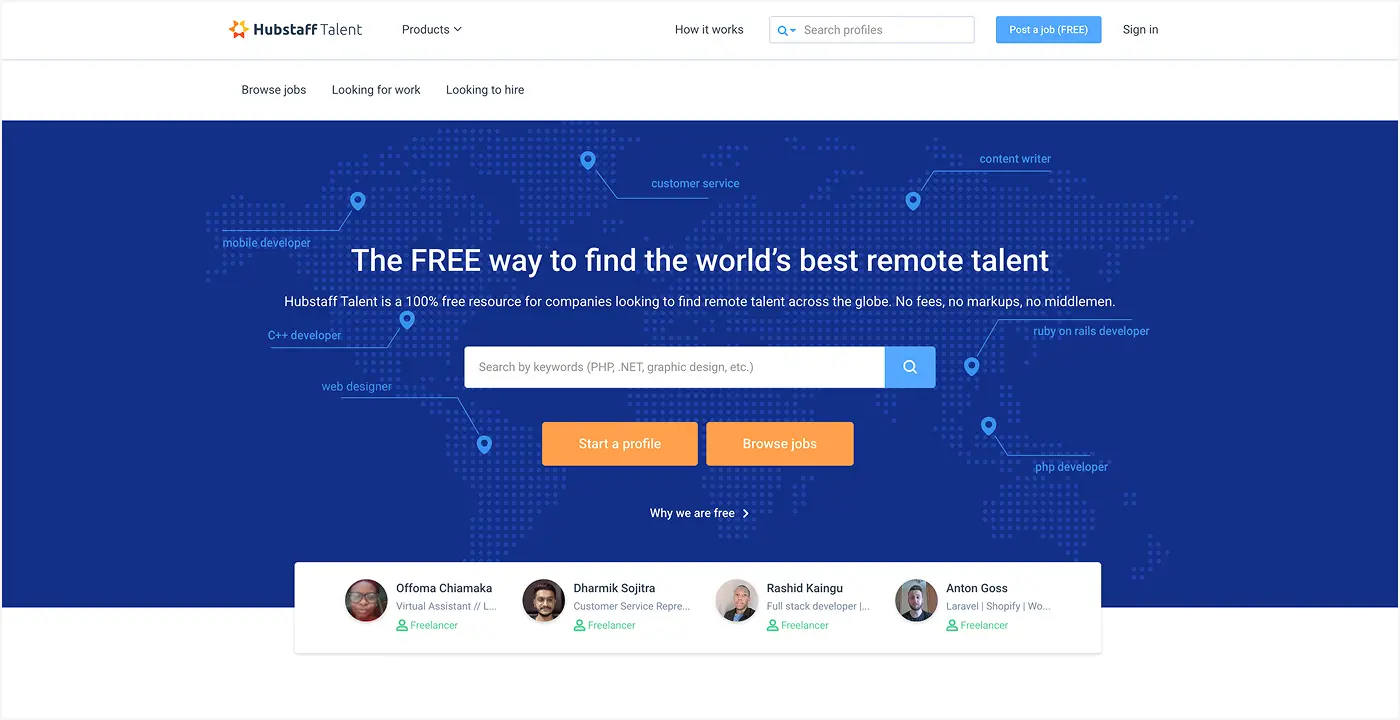
Hubstaff Talent is a free searchable database from which you can hire cross-border developers. When opening a position, you can specify the countries applicants should be from to ensure you’re connected with people in your time zone.
Key benefits:
About 98K businesses use this platform and 580K active users use it regularly. You can scroll through them by setting location, rate, and category criteria. The system has its own time-tracking feature that allows you to know how much time specialists have really spent on your project.
Why choose them:
Hubstaff Talent is well-suited for organizations that are skilled at evaluating candidates, handling contract terms and negotiations on their own, without pre-vetted lists.
What is a nearshore developer?
Nearshore developers are those specialists who work in countries close to yours. For example, an American company can hire programmers from Mexico. Brazilian businesses work with Argentinian employees. European businesses work with software development companies in the UK, Poland, or Ukraine.
As a firm that hires engineers in a nearby country, you get the following problems fixed: you get answers during your workday instead of waiting for next morning. Problem-solving doesn’t wait for a long chain of messaging that is required when the gap is 12+ hours between employers and employees.

Because collaboration happens live, you benefit from speed and control while avoiding paying local salaries which cost 2-3 times more. Time zones work for you, making your in-house team and extended crews feel like one unit because you deal with issues on time.
Good providers usually offer this set of services:
- Custom software built from your requirements
- Extra coders added to your team for specific timeframe
- Maintaining and fixing existing software
- Testing before launch to find bugs early
- App and website design and building
- Mobile app development for iOS and Android
- Cloud setup and database work
- Technical advice for new projects
Platforms differ in how they work: freelance marketplaces let you find nearshore software engineers for hire by the hour or project, while agency platforms offer dedicated teams with fixed monthly rates or milestone-based pricing.
You can work with one programmer or get an entire team that includes designers, data analysts, and DevOps specialists to handle your project professionally without managing it yourself. And in the following passage, we’ll compare each website so you can understand which one suits you best.
Comparing platforms to hire dedicated nearshore developers
When evaluating these eight sites, we checked Trustpilot, Clutch, and Google Maps to see what users actually report of each portal’s pricing, features, hiring speed, specialists’ expertise, and support.
Pricing models
Toptal and Arc.dev show full price upfront so no surprises will ruin your plans later. Upwork and Freelancer add extra percentage fees that raise your actual bill. Direct negotiation platforms like Limeup, impltech, and LinkedIn let you set your own price.
Platforms by pricing model:
| Platform | Hourly rates | Fixed price | Dedicated teams |
|
| ✅ | ✅ | ✅ |
|
| ✅ | ✅ | ✅ |
|
| ➖ | ➖ | ➖ |
|
| ✅ * | ✅ * | ➖ |
|
| ✅ | ➖ | ✅ |
|
| ✅ | ➖ | ✅ |
|
| ✅ * | ✅ * | ➖ |
|
| ✅ | ✅ | ➖ |






Platforms marked with asterisk (*) charge additional fees. Upwork: freelancers pay 10-20%, clients pay 5%. Freelancer: freelancers pay 10%, clients pay 3%. These fees are added on top of the developer’s rate.
When you hire developers in nearby countries, you can choose hourly rates for flexibility and short projects, when the scope is unclear and changes may appear. Opting for fixed-price approaches is beneficial when you know what you want.
If you are looking for continuous development and team integration over months, the best way is to cooperate with a nearshore software team for hire.
Developer vetting
Vetting matters because bad hiring means wasted money and rework, so some platforms test developers before you see them, while others leave all checking to you.
- When you check, you see past work and ratings but do all screening yourself.
- Site-checked platforms run technical tests and interviews so only qualified people reach you.
- Agency-checked platforms pre-screen candidates before showing them to you, and their work results can be seen on independent portals.

Time to hire
Speed depends on how much specialist assessment happens before you interview them. Platforms like Limeup get you people ready to work in under one week because evaluation happens before you start looking.
Direct hiring takes 2+ weeks because you need to find people, have a discussion with them, and negotiate everything.

Support and guarantees
What happens when things go wrong? To hire nearshore developers, you can choose platforms that help fix problems.
- Limited help means the platform won’t fix hiring problems, you handle it alone. They don’t take responsibility for violating deadlines or whatever may arise.
- Moderate support means you can ask questions, clarify billing information and account settings. If the quality is poor, you may be able to get a refund, but it’s not guaranteed, as the Upwork support page shows they aren’t responsible for vetting or choosing.
- Strong support includes free replacements if the developer doesn’t work out and account managers to help you solve problems before they blow up.

Pick based on what matters most to you. Do you need speed and guaranteed quality? Select such nearshore software development companies as impltech and Limeup? Have budget constraints and time to screen people? Try Upwork or Freelancer. Budget is zero and you’re good at hiring? Hubstaff or LinkedIn work for you.
Now, we invite you to get familiar with the concrete actions you need to take to be able to save time, money on rework and be linked to professionals from the first try.
How to choose the right nearshore developers for hire?
Resumes don’t show real engineers’ abilities, so hiring takes testing on multiple fronts. First, you need to check their past experience, technical skills, communication, and whether they fit your team culture.
Exploding Topics reports that payroll ranks among the highest expenses in a startup’s budget, leading to failure. When you collaborate with specialists from nearby countries, you have the chance to avoid this restraint. And, so, between you and a successfully completed project is the task to find the best programmers, and the guide below will help you to work through it.

Evaluate experience in similar projects
Prioritize engineers with experience building similar solutions. For example, if you want to hire an app developer, ascertain that they’ve completed projects for companies in your country and industry.
Call their past clients or managers directly and ask three specific questions:
- Have you worked with US/European clients before?”
- “What timezone challenges have you solved in past projects?”
- “How do you handle cultural differences in feedback styles?”
A developer with relevant experience onboards 50% faster and makes fewer mistakes because they already know the challenges in working for foreign clients.
Run a technical test
Build your test from actual work and have them create a feature from your product or fix a real performance bug before you hire dedicated nearshore developers. It will allow you to watch how they work, not just the final code.
Problem-solving methodology matters more than immediate solutions because someone with good thinking will write better code than someone who rushes. Experts with strong nearshore software development processes deliver cleaner code that needs less maintenance and costs you less long-term.
Test communication skills
They must explain technical decisions in English clearly so your team gets it and flag risks without creating confusion. Effective communicators reduce redundant work because fewer misunderstandings happen.
Sandra Aguillion’s and Julia Cronin-Gilmore’s research shows that remote teams face challenges don’t see body language. Misunderstandings happen more frequently when team members rely solely on written communication.
Assess cultural fit
Ask how regional software developers for hire prefer to work and what their ideal setup looks like. If they don’t like daily calls but your team pairs all day, that’s a mismatch. It’s better to identify mismatches during the interview process
Everyone has their perfect schedule, brainstorming and communication approaches. Someone who admits what doesn’t work for them is more honest than someone claiming total flexibility.
Check timezone compatibility
Nearshore only works with a small time difference. You can schedule your first call during your normal work hours so you can experience how actual collaboration will feel. Ask about their timetables, local holidays, and vacation patterns.
Typically, three to four hours of overlap works well for businesses. If you share only two work hours, it is tight but possible. Strong timezone compatibility cuts waiting times because you get responses the same day instead of receiving a comment about a minor fix the next morning.
Key skills to check when hiring nearshore developers
you expect. A quick skills check will spotlight their strengths and weaknesses in tools and languages as well as teamwork.
To help you hire a software developer and supply you with specific details that will help you see through loud promises, we’ve outlined the hard and soft skills that define accomplished engineers.

Technical skills
When evaluating agencies’ expertise or reviewing CVs from freelancers on platforms, you need to check what languages they know, what tools they use, and what they’ve built before to understand whether they are competent to carry out your project.
-
Technology stack. Make sure nearshore software experts know languages like Python, JavaScript and use frameworks like React, Vue, or Django. It’s worth noting that JavaScript remains the most used programming language among programmers from all over the world, as 66% coders use it in their work according to Statista.
In Latin America, for example, the most popular tech stack is JavaScript and Python.
| Languages, tools, and frameworks | Examples |
| Languages | JavaScript, Python, Java, Go, Rust, C#, PHP, TypeScript |
| Frontend frameworks | React, Vue, Angular, Next.js, Svelte |
| Backend frameworks | Django, Flask, Laravel, Node.js, Spring, .NET |
| Databases | PostgreSQL, MySQL, MongoDB, Redis, DynamoDB |
| Cloud platforms | AWS, Google Cloud, Azure |
| Mobile frameworks | React Native, Flutter, Swift, Kotlin |
Developers fluent in your tech stack can contribute immediately, whereas others may need weeks to ramp up.
- Testing and code quality. When you hire a nearshore developer who is reliable, they will do unit tests, integration, and end-to-end tests. They will also follow best practices to align with code standards. You can request code samples and look at how they name things and structure functions.
- Version control and development tools. Ask about their Git experience and whether they used GitHub, GitLab, or Bitbucket. Do they understand branches, pull requests, and code reviews?.
| Tools | Common examples |
| Git | Branching, merging, pull requests, commits |
| CI/CD | Jenkins, GitHub Actions, GitLab CI, CircleCI |
| Containers | Docker, Kubernetes, container management |
| Monitoring | Datadog, New Relic, Prometheus, logging tools |
| Project tools | Jira, Linear, Asana, Trello |
Knowledge of these tools is what differentiates those who are just starting their journey from programmers who know how to automate routine processes, plan well, and deliver on time.
Soft skills
Apart from understanding how to use languages and tools, coders should be experts in teamwork, solving problems. When you hire someone whose technical knowledge is very competitive but communication is weak, it can negatively affect the undertaking because this specialist won’t be able to explain things to colleagues.
Now, let’s explore these essentials closely:
- Problem-solving approach. Give them a real bug from your code and watch how they process it. Do they gather information first like looking at logs and error messages? Professionals test hypotheses instead of guessing, look for root cause not just quick fixes and document what they learned and fixed.
- Learning and growth. Nearshore developers for hire who keep learning, adapt to market changes, tech stack shifts and product requirements. Clarify whether they learn new tools and languages regularly, study from mistakes and feedback, and stay current with tech trends.
- Working in teams. Have they worked in distributed teams before? For example, app development companies in the UK give constructive feedback to teammates, respect different ways of working, and of course they participate in team discussions and standups, helping improve the quality of work.
- Proficiency in English. Language barriers cost more than misunderstood emails—they cause project delays, missed requirements, and costly rework. Before hiring nearshore developers, assess their English level against your collaboration needs.
Pass on anyone who blames all problems on others or refuses to improve, as the best nearshore coders combine technical depth with genuine interest in helping your team succeed.
How much does it cost to hire regional programmers?
Money drives hiring decisions, and for many businesses an estimate is the main criterion for evaluation. You need to know factors that affect experts’ rates, how price varies by location, experience, and project type, and how to budget correctly to pick the best region. Don’t assume cheaper hourly rates mean cheaper projects. Rework and delays add up fast.
Average hourly rates across nearshore regions
Full stack software development companies’ hourly rates vary based on which region you hire from. Look at the table below, which shows real 2025 pricing across five major markets, including the USA, UK, Western and Eastern Europe and Latin America.
| Region | Junior (0–2 yrs) | Mid-Level (3–5 yrs) | Senior (6+ yrs) |
| Latin America | $34–$50/hr | $50–$70/hr | $70–$92/hr |
| Eastern Europe | $30–$40/hr | $40–$70/hr | $70–$100/hr |
| Western Europe | $50–$75/hr | $75–$100/hr | $100–$150/hr |
| United Kingdom | $60–$85/hr | $85–$120/hr | $120–$180/hr |
| United States | $55–$80/hr | $80–$130/hr | $130–$220/hr |
Rates across regions reflect cost of living, tech education quality, and state of their economies. Latin American (LATAM) developers typically charge $34–$92/hr, while Central and Eastern European (CEE) rates range from $30–$100/hr depending on country and seniority.
US companies can achieve 10%–20% cost reductions with Western European employees while retaining quality and easy collaboration.
A nearshore software team for hire with specialized skills, such as AI, machine learning, and cloud architecture commands premium rates across all regions.
Factors influencing final project cost
Final bill shapes go beyond hourly rates. Coders’ level of expertise, project scope, and contract terms all affect the final cost of deliverables. Below, you will find a clear breakdown of these points you need to consider if you want to get nearshore software experts:

- Experience level. Juniors’ services cost half of senior rates, but they can’t work independently. Tested engineers complete tasks faster without rework. This means experts’ rates are higher upfront, but by partnering with them, you save money because they need less direction.
- Project complexity. Unique and complex features drive total hours and impact your budget significantly. Simple apps can take 400–600 hours while enterprise-level systems take 1,500+ hours.
- Communication problems. Teams with good timezone alignment charge less in delay time because discussions happen in real time. One hour of daily overlap adds 20–30% to schedules while poor overlap means slower conflict resolution.
- Hidden costs. Take into account that onboarding expenses, tool licenses, and extra management time run 10–15% above base rates. So it makes sense to accept the budget 20% lower than the estimate of a developer.
- Contract length. This aspect changes pricing because longer commitments cost less per month. Month-to-month deals cost 15–20% more while three-month deals get small discounts. Six-month teams often negotiate 10–15% lower rates.
The cheapest hourly won’t necessarily result in the cost-effective outputs. A low-cost solution that requires constant fixes increases the budget more than when you hire a nearshore tech talent that gets it right.
Looking for a reliable nearshore development team?
We’ve examined platforms, pricing models, vetting processes, and what real clients report, so you can save your time. And now you know how each platform works, understand that track record proves quality better than marketing claims and that real feedback and transparent pricing matter equally.
You can streamline cooperation with regional coders by reaching out to Limeup for a free consultation. Schedule time with our crew and get full support from the first conversation, and we’ll empower you to reach your goal, whether you want to automate processes, optimize operations, or open new revenue streams.
FAQ (choosing & comparing)
What should I check before hiring a regional specialist?
Look at their past projects first. What have they built for companies in your country? Does it match your needs? Talk to them about how they work, ask them to solve a real problem, and watch how they think through it.
Do they ask good questions? Good communication means as much as perfect code, and a developer who talks clearly will save you time and money in a distributed team.
How do I choose the best platform to hire nearshore talent?
Your decision depends on what you need most. For instance, agencies offer end-to-end support and help with legal considerations that is vital when collaborating with experts from another country but their prices can sometimes be higher.
Broad talent platforms give you access to many candidates at once, but you’ll need to have a conversation with each of them, and they’ve rarely been pre-vetted.
What affects the cost of hiring nearshore tech professionals?
Experience matters most; that’s why senior developers’ services cost more per hour. The same is related to specialization and the complexity of projects. Consider that the pricing model also matters, as hourly work fees differ from fixed-price projects.
How long does it take to hire a nearshore development team?
Agencies gather teams fastest, and it usually takes 1–2 weeks. General marketplaces spend 1–3 weeks connecting you with engineers. Hiring directly from LinkedIn or job boards takes 2–8 weeks, as you need to do all the work yourself.