Cyclomatic Complexity Definition
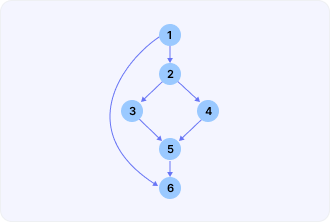
Cyclomatic Complexity – is a quantitative measure used in software engineering that examines the control flow complexity of a program. It calculates the number of linearly independent paths inside source code, reflects the structural complexity and the probable need for testing. It measures the number of decision points in the code’s control flow, including loops, conditionals, switch cases, and boolean operators.
Its basis is from graph theories that are based on the concept of a control flow graph with nodes representing program statements and edges representing control flow among the statements. Furthermore, programs having High Cyclomatic Complexity will show more possible execution paths so they should offer more chances to errors and other kind of defects.
The impact of cyclomatic complexity on software development
This measure impacts various aspects in software creation, starting from testing and finishing with maintainability and risk assessment. Below, we describe each case:
Software quality and maintainability
High cyclomatic complexity lowers the maintainability of the code. This means that complex functions remain difficult for developers to understand and modify without introducing additional bugs. In other words, such areas of high complexity generate cognitive overloads to developers who onboard a project team or resume work on an abandoned project, thereby decelerating the development and increasing error rates.
Testing and quality assurance
The number of test cases depends on cyclomatic complexity. Thus, a function with complexity level 5 requires a minimum of 5 test cases to cover all independent paths. The more complex the system, the higher is number of test cases a developer should take into account.
This measure allows engineers to focus on the most complex parts and ensure that areas where bugs are most likely to occur are covered.
Bug prediction and risk assessment
Some research has shown a correlation between bug density and high cyclomatic complexity. As complex features statistically have more bugs per line than their simpler alternatives, it appears insightful for predicting risk scenarios and identifying which code sections require additional attention.
Understanding the cyclomatic complexity helps developers to test software properly and reduce the number of bugs. You can scroll through our other terms to learn more about software engineering and design.